
Interior car detailing goes well beyond a vacuum and a wipe down of the dash. A proper interior detail covers steam cleaning every surface, treating your upholstery or leather, dressing the vinyl and trim, cleaning out door jambs, and dealing with any odour or mould sitting in the fabric and air vents. Basically, everything a regular clean skips because it’s too time-consuming or needs the right gear to do properly. If you’ve ever had your car “detailed” and wondered why it didn’t feel much different from a good vacuum, this guide explains exactly what should have happened, and what to actually look for next time.
We’ve detailed hundreds of cars across Canberra at this point, from family SUVs full of dropped snacks to tradie utes that haven’t seen a proper clean in years. The interior is honestly where most of the difference between a $60 wash and a real detail shows up.
Why “Interior Detailing” Means More Than Vacuuming
A vacuum picks up loose debris. That’s it. It doesn’t touch the bacteria living in your seat fabric, the grime baked into your door jambs, the dust packed into your air vents, or the fading happening slowly on your dash from months of Canberra sun.
Interior detailing is about the stuff you can’t see and can’t reach with a household vacuum. Steam cleaning lifts embedded dirt and sanitises surfaces at the same time. Proper leather or fabric treatment protects the material so it doesn’t crack, fade, or stain going forward. And odour treatment actually deals with the source of a smell instead of just masking it with an air freshener clipped to your vent, which, let’s be honest, everyone’s tried and it never really works long term.
Step-by-Step — What We Actually Do
Here’s what a full interior detail actually involves when it’s done properly, not rushed.
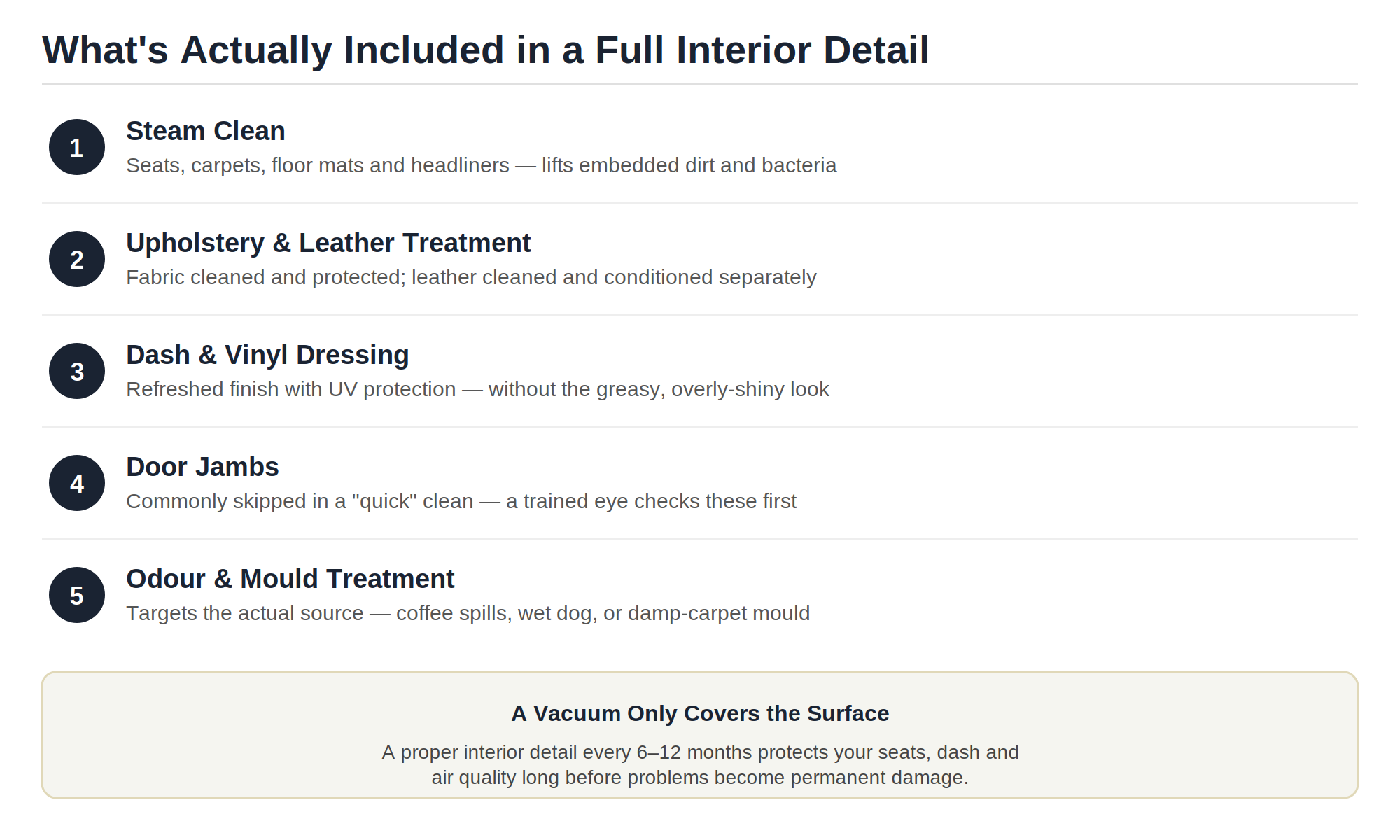
Steam cleaning your car’s interior is where we start. We steam clean seats, carpets, floor mats, and headliners. Steam lifts dirt out of fabric fibres and kills a good chunk of the bacteria and dust mites living in there too, without soaking the material the way a regular carpet shampoo might.
Upholstery and leather treatment. Fabric seats get treated with a proper upholstery cleaner and protectant. Leather seats get conditioned to stop them drying out and cracking, which is a real problem in Canberra given how much our climate swings between dry heat and cold.
Dash and vinyl dressing. We clean and dress the dashboard, door cards, and other vinyl or plastic trim so it looks refreshed without leaving that greasy, overly-shiny look some cheap products give. A good dressing also adds some UV protection, which matters more than people realise here.
Door jambs. These get skipped constantly, and it shows. Door jambs collect a surprising amount of grime, and they’re one of the first things a trained eye notices when checking how thorough a detail actually was.
Odour and mould treatment. If your car’s got a lingering smell, whether it’s from spilled coffee, a wet dog, or mould building up from a leak or just humidity trapped in the carpet, we treat the actual source rather than covering it up. This usually means targeted cleaning plus an ozone or fogging treatment depending on how deep the problem sits.
Fabric vs Leather vs Vinyl — Different Care, Different Products
This is where a lot of cheaper detailing jobs go wrong, using one all-purpose product on every surface in the car.
Fabric seats and carpets need a cleaner that lifts dirt and stains without leaving the material damp for days or breaking down the fibres over repeated cleans.
Leather is basically skin, and it needs to be treated like it. Harsh cleaners strip the natural oils out of leather over time, which is exactly how you end up with cracking and fading a few years down the track. Proper leather care means cleaning and conditioning as separate steps. If you’re unsure where to start, here’s a guide on how to clean leather car seats.
Vinyl and hard plastic trim can handle a bit more, but using the wrong dressing here leaves a slick, shiny finish that actually attracts more dust and can make your dash glare distractingly in sunlight while you’re driving.
Using the right product on the right surface isn’t just about looking good on the day, it’s what determines whether your interior still looks decent in three years or starts falling apart in twelve months.
How Often You Actually Need It (Myth-Busting the “Only Before Selling” Assumption)
A lot of people think interior detailing is something you do once, right before selling the car, just to bump up the resale value. That’s actually one of the least useful times to get it done, because by then you’re often dealing with years of built-up grime, embedded odours, and leather that’s already started drying out.
Realistically, most daily drivers benefit from an interior detail every 6 to 12 months, more often if you’ve got kids, pets, or you eat in the car regularly (no judgement, we’ve all done it). Regular detailing isn’t about vanity, it protects the actual value and condition of your interior surfaces before they degrade to the point where a clean can’t fully reverse it. Think of it the same way you’d think about servicing your engine. Waiting until there’s an obvious problem means you’re already playing catch-up.
Interior Car Detailing in Canberra — Book Your Assessment
Whether it’s a family SUV that’s seen a few too many spilled snacks or a tradie ute overdue for a proper clean, our interior detailing service covers every Canberra vehicle type. Book a free assessment and we’ll tell you honestly what your interior actually needs.
FAQ
How long does interior detailing take?
A full interior detail typically takes between 2 and 4 hours, depending on the size of your vehicle and how much work the interior actually needs. A heavily soiled car or one with odour or mould issues can take longer since those treatments need proper time to work.
Can you remove pet hair, smell, or mould?
Yes, all three are things we deal with regularly. Pet hair gets worked out with specific tools designed to pull hair out of fabric rather than just pushing it around. Smells and mould get treated at the source with targeted cleaning and odour treatment, not just covered up with a spray.
Is steam cleaning safe for leather?
Yes, when it’s done correctly. Steam cleaning leather uses controlled heat and pressure, followed up with a proper leather conditioner to replace any moisture and keep the material supple. It’s actually one of the more effective ways to lift dirt out of leather grain without over-wetting or damaging the surface, provided it’s not left sitting too long or done with excessive heat.
Do you steam clean the entire car interior, or just the seats?
The whole interior — seats, carpets, floor mats and headliners all get steam cleaned as part of a full interior detail, not just the visible surfaces.
How much does interior detailing cost in Canberra?
Pricing depends on your vehicle’s size and how much work the interior needs — a lightly used car costs less than one with heavy staining, odour or mould treatment involved. See our Canberra Car Detailing Cost Guide for a full pricing breakdown, or book a free assessment for an exact quote.
Ready to see the difference a real interior detail makes? Book our Full Detailing package and give your car’s interior the clean it’s actually been missing.
Quick Recap
- Interior detailing covers steam cleaning, upholstery and leather treatment, dash and vinyl dressing, door jambs, and odour or mould removal, not just a vacuum
- Fabric, leather, and vinyl each need different products and care to avoid damage over time
- Door jambs and odour sources are the most commonly skipped parts of a “quick” clean
- Getting your interior detailed every 6 to 12 months protects it long before problems set in, waiting until you’re selling is often too late
- Steam cleaning is safe for leather when it’s paired with proper conditioning afterward