
Most people clean leather car seats like they’re scrubbing down a kitchen counter. They grab a bottle of Spray ‘N Wipe or whatever dish soap is sitting by the sink, splash some water around, and scrub away.
Honestly? That’s the quickest way to ruin your interior.
Automotive leather isn’t raw cowhide, but it isn’t indestructible vinyl either. Modern seats have a super-thin polyurethane clear coat over the top to keep out sweat and dirt. When you attack it with harsh household cleaners, you aren’t “deep cleaning”—you’re slowly eating away that top layer until the seat gets shiny, sticky, and starts cracking along the bolster.
I’ve seen drivers in Canberra wreck a $70,000 car’s cabin in under two years just by making a few simple mistakes. Here is how to actually look after your leather, why our weird weather makes it tricky, and how we handle it at the shop.
Why Leather Needs Completely Different Care Than Fabric or Vinyl
You can’t treat leather like cloth. If you dump water on a fabric seat, it just soaks in and smells like a wet dog until you extract it. Leather is a whole different beast.
- Topcoat vs Hide: Beneath that thin clear layer sits genuine leather hide. If you strip the top layer with bad chemicals, the hide underneath dries out fast.
- Aggressive Cleaners destroy finishes: A lot of cheap all-purpose degreasers are way too harsh. Use them enough times and they leave the topcoat feeling tacky or dull.
- The Canberra Heat Cycle: Our weather in ACT is brutal on car interiors. We go from frosty -3°C winter mornings to 38°C dry heat in January. That constant heating and cooling bakes the topcoat, making it brittle if it isn’t kept clean and friction-free.
The Everyday Mistakes That Damage Leather Seats
Most of the ruined seats I see at M&N Detailing didn’t happen from a massive ink spill. They happened because the owner thought they were doing the right thing every Sunday morning.
- Using Dish Soap: Dish detergent is built to cut grease off a frying pan. On your seats, it leaves a slimy film that’s almost impossible to wipe off completely and dulls the finish over time.
- Grabbing Baby Wipes for Quick Cleanups: I hear this one constantly: “But mate, baby wipes are safe for a baby’s skin!” Sure, but your seat isn’t a newborn. Baby wipes are loaded with oils, fragrances, and skin moisturizers. They leave a gummy residue on the leather that acts like a dirt magnet, grinding into the grain every time you slide into the driver’s seat.
- Soaking the Leather: If you spray too much liquid onto perforated leather seats, it seeps straight down into the seat cushion foam below. Then you get trapped moisture, nasty mildew smells, or hard water lines line up as it dries out unevenly.
- Parking in Direct Sun to Dry: Wiping down wet seats and throwing the car out in the scorching sun to “dry it fast” is a recipe for stiff, crunchy seams.
How We Clean Leather at the Shop
Proper leather care isn’t about slapping product everywhere—it’s a patient, step-by-step process.
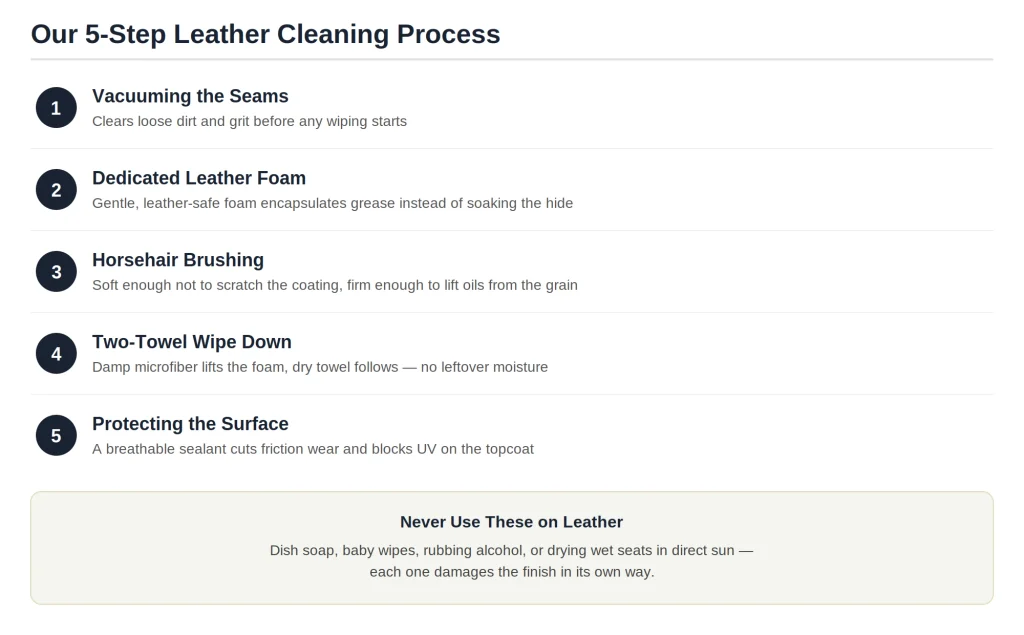
- Vacuuming the Seams: First step is getting all the loose dirt, dog hair, and grit out of the stitching. If you leave grit in the seams and start scrubbing with a wet towel, you’re essentially rubbing fine sandpaper across your leather.
- Dedicated Leather Foam: We use gentle, leather-safe cleaners applied as a dry foam. Foam sits on top of the grain and encapsulates the grease instead of drowning the hide in water.
- Horsehair Brushing: Soft horsehair brushes are the gold standard. They’re soft enough not to scratch the coating, but firm enough to get deep into the natural leather grain and lift out skin oils and sweat.
- Two-Towel Wipe Down: We lift the dirty foam off with a damp microfiber, then immediately follow it up with a dry towel. No leftover moisture, no streaks.
- Protecting the Surface: On modern coated leather, “conditioners” don’t really soak deep into the hide—they work on the topcoat. We apply a breathable sealant that keeps the clear layer slick, cutting down on friction wear from your jeans and blocking UV rays.
Need your whole cabin sorted out? Check out our Interior Detailing Service to see how we handle carpets, dashboards, and trim alongside leather.
How Often Should You Actually Do This?
You don’t need to deep clean your seats every single weekend—over-cleaning causes its own set of problems. But Canberra’s dry climate means you shouldn’t ignore it for six months either. Here’s a general guide:
| Vehicle Usage | Cleaning Interval | Conditioning / Protection |
| Daily Driver (Light Interior) | Every 4 to 6 Weeks | Every 3 Months |
| Garaged Weekend Car | Every 2 to 3 Months | Every 6 Months |
| Work Ute / Daily Beater | Every 2 Weeks | Every 1 to 2 Months |
Keep in mind, these are just rough baselines. If you park on the street in Fyshwick every day or carry kids around, you’ll need to wipe things down a bit more often.
Spills and Stains: What to Do Immediately
When you drop a flat white or drop takeaway sauce on the seat, panic sets in. Take a breath and do this:
- Blot, Don’t Rub: Grab a clean microfiber cloth and press down hard to soak up the fluid. If you rub back and forth, you’re just pushing coffee deep into the stitching and perforations.
- Watch Out for Blue Jeans: Brand-new blue jeans love dumping dye onto cream or white leather seats. Get on top of dye transfer as soon as you spot it—once it bakes under the summer sun, it’s a nightmare to lift.
- Keep the Rubbing Alcohol Away: Never, ever grab nail polish remover, methylated spirits, or rubbing alcohol to spot-clean a stain. It breaks down the finish layer fast and can pull the color right off the seat onto your rag.
Real Results From Real Canberra Drivers
Don’t just take my word for it. Here’s what one of our clients had to say after bringing his car into the shop:
“Just got my Zeekr 7x back from M&N – went in for ceramic coating, leather treatment, tint, debadge – the lot! Big thanks to Sunny! It’s looking so good… Sunny is a damn wizard!”
— Luke Cullender, Verified Google Review
FAQ
Can I use baby wipes on leather car seats?
Honestly, please don’t. They won’t burn through the seat overnight, but those skin lotions and fragrances in the wipe leave a film behind. That film gets tacky, grabs onto dirt, and grinds away at your seat’s clear coat over time. Stick to a dedicated leather cleaner.
How do I get a stain out of leather without ruining it?
Patience over power. Use a dedicated leather cleaner with a soft horsehair brush, work in gentle circles, and let the product lift the grime onto a clean towel. Avoid aggressive scrubbing or household solvents—that’s how people accidentally strip the dye off their seats.
Do leather conditioners actually do anything on coated leather?
They do, but not the way most people think. Conditioners on modern cars don’t soak into raw hide like an old saddle; they sit on the topcoat. A good product keeps that outer protective coating supple, reduces friction from your clothes, and helps block UV rays.
Is leather harder to maintain than cloth in Canberra?
Not harder, just different. Cloth is a nightmare for liquid spills because coffee soaks right into the foam padding. Leather handles liquid spills way better, but it hates Canberra’s dry heat and intense UV rays. If you don’t keep it clean and protected, it bakes and cracks.
Bring Your Cabin Back to Life
Not sure if your seats just need a light maintenance wipe or a proper deep-clean extraction?
Book an interior assessment with M&N Detailing — pull up to the shop, we’ll take a look at your seats, and we’ll tell you straight up what your leather actually needs.