
If you drive around Canberra, you already know the story. You buy a new car, take it out on the Monaro Highway or Tuggeranong Parkway, and within a few weeks, you hear that stomach-churning thud of a flying pebble hitting your front bumper. You pull into the driveway, take a look, and there it is: a deep, ugly stone chip right through the clear coat.
Most people we talk to at our shop have heard of paint protection film, but almost nobody really knows how it differs from a ceramic coating until the damage is already done. Even worse, the detailing industry is full of buzzwords that make choosing the right protection feel way more complicated than it needs to be.
Is it a liquid? Is it plastic wrap? Why does one shop charge double what another quotes?
We put this guide together to clear up the confusion. Here is an honest, behind-the-scenes breakdown of what clear bra — also called a paint protection wrap, or PPF — actually is, how we fit it in the shop, what drives the price, and whether it is actually worth your hard-earned money.
What Paint Protection Film Actually Is
You’ll also hear this same product called a ‘paint protection wrap’ or ‘clear wrap’ — different name, same film.The single biggest misconception we clear up every week is the difference between paint protection film and ceramic coatings.
Paint protection film (PPF) is an actual physical barrier. It is a clear, incredibly tough thermoplastic polyurethane membrane that we custom-fit directly over your factory paint. Think of a ceramic coating like a high-tech wax that keeps your car shiny and easy to wash, while PPF is an invisible set of armor built to take a beating.
Here is why it works:
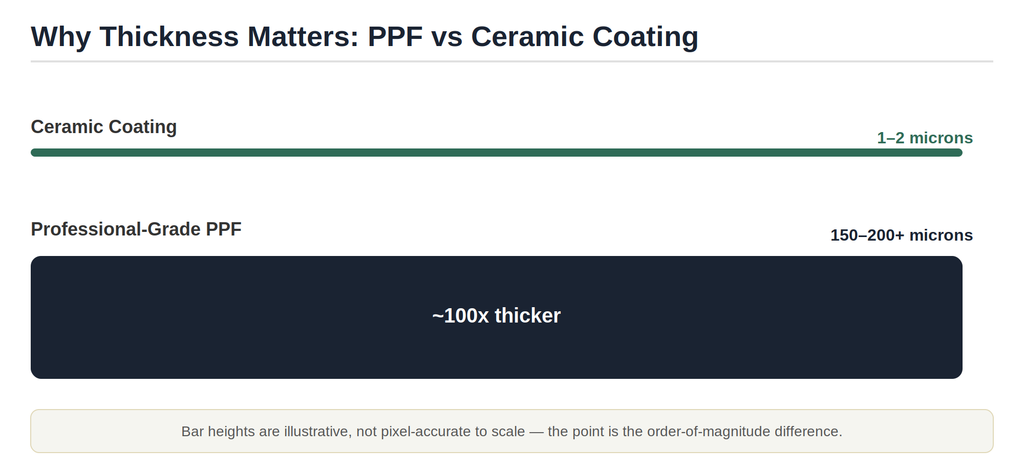
- Physical Thickness: A standard ceramic coating sits at about 1 to 2 microns thick. Professional-grade PPF ranges from 150 to over 200 microns. That extra thickness makes all the difference when gravel hits your bumper at 100 km/h.
- Impact Absorption: Because the film is elastomeric, it flexes on impact. It absorbs and disperses the energy from road spray, stones, and heavy bug splatters long before anything reaches your factory paint.
- Self-Healing Finish: The top layer of modern premium film is designed to heal itself. If you get fine swirl marks from washing or light bush scratches, park the car out in the warm Canberra sun or pour warm water over the panel, and the scratches simply vanish.
How We Apply PPF in the Shop
Installing a wrap correctly takes time, patience, and absolute cleanliness. If a detailer rushes the prep work, you will see edge lifting and trapped dirt within months. Here is what actually happens once your car enters our bay:
Step 1: Decontamination and Paint Correction
We never put film over dirty or damaged paint. First, your car gets a multi-stage wash, an iron decontamination, and a clay bar treatment to pull out embedded grime. Then, we perform paint correction to polish out any existing factory flaws. Whatever is on your paint when the film goes down is sealed there permanently, so the paint underneath has to be dead right first.
Step 2: Precision Software Cutting
We map and cut the film using specialized software templates designed for your car’s exact make, model, and trim. Where possible, we extend the template edges slightly so we can wrap the film neatly around the panel edges, keeping seams invisible.
Step 3: Wet Positioning
We flood both the vehicle panel and the back of the film with a specialized slip solution. This lets us float the film over the bodywork and align it perfectly around sensors, badges, and complex body lines without damaging the adhesive.
Step 4: Squeegee Work and Edge Wrapping
Using soft squeegees, we work from the center out to push the solution and air bubbles out from under the film. Then comes the detail work: carefully tucking and wrapping the edges inside door gaps and panel seams so nobody can tell there is film on the car.
Step 5: Heat Curing and Inspection
We use heat guns to lock down the edges and check every square inch of the film. The car then sits in our climate-controlled shop to let the adhesive cure properly before we hand the keys back to you.
What Determines the Cost?
Quotes for PPF in Canberra usually sit somewhere between $1,200 for basic front-end protection and $6,000+ for a complete vehicle wrap. The price comes down to four basic things:
- How Much Coverage You Want:
- Front Bumper and Headlights: The bare minimum for highway driving to block direct stone spray.
- Partial Front / Track Pack: The sweet spot for daily drivers. This covers the front bumper, full hood, front guards, side mirrors, and lower rocker panels.
- Full Body Wrap: Every painted panel gets wrapped. Recommended for high-end sports cars, matte paint finishes, or vehicles you plan on keeping forever.
- The Size and Shape of Your Vehicle: A small hatchback takes far less material and labor than a large SUV or dual-cab ute with aggressive, sharp bumper angles.
- Quality of the Film: Top-tier optical polyurethane films backed by 10-year manufacturer warranties cost more than cheap vinyl films, but they will not yellow, haze, or crack under the harsh Aussie sun.
- Condition of Your Paint: Older cars with stone chips or micro-scratching take extra prep time before we can start laying film.
How Long Does PPF Actually Last?
When installed correctly and looked after, high-grade film easily lasts 7 to 10+ years.
A few things influence that lifespan:
- Our Local Weather: Canberra exposes cars to real extremes—frosty winters followed by blistering summer UV rays. Quality film is UV-stabilized so it won’t yellow or degrade under heat.
- Basic Maintenance: You do not need anything fancy. Regular hand washes with pH-neutral soap and snow foam keep the self-healing layer clean and working properly.
- Easy Panel Replacement: If a rogue rock punches a hole in your film on the highway, you do not need to re-wrap the whole car. We simply peel off the damaged piece on that single panel and lay down a fresh piece. Your original paint underneath remains untouched.
PPF vs Ceramic Coating vs Doing Nothing
Deciding what your car needs depends on what you are trying to protect it against:
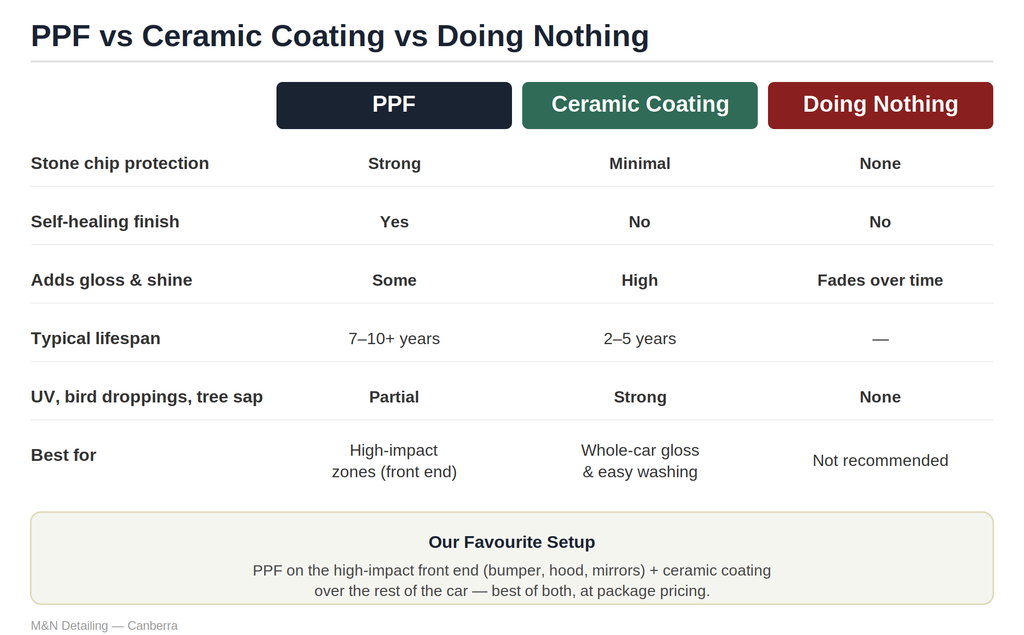
Paint Protection Film (PPF): Acts as a heavy physical barrier against stone chips and road debris. It self-heals under heat and lasts 7 to 10+ years. It is hands-down the best defense for high-impact zones like your front bumper and bonnet.
Ceramic Coating: Acts as a super-slick chemical layer that seals your paint against bird droppings, tree sap, and harsh UV rays while adding deep gloss. It makes washing effortless, but it is far too thin to stop a flying stone chip. It typically lasts 2 to 5 years.
Doing Nothing: Saves money upfront, but leaves your paint completely exposed to stone rash, sun fading, and etching. Repairing chipped and weathered paint down the road usually costs far more than protecting it early.
Our Favourite Setup: You don’t actually have to pick just one. Most of our clients opt for PPF on the high-impact front end (bumper, hood, mirrors) to take the brunt of highway debris, combined with a ceramic coating over the rest of the car for ultimate gloss and low-maintenance washing. Own a new electric car? See why new BYD, Tesla and Zeekr paint needs protecting early
We also offer combined PPF and ceramic coating packages at better pricing than booking each service separately — see our full ceramic coating options to find the right pairing for your car.
Frequently Asked Questions
Does PPF turn yellow over time?
Old, cheap vinyl wraps from years ago used to turn yellow quickly under the sun. Modern TPU films are engineered with built-in UV blockers that stay crystal clear for up to a decade without clouding or discoloring.
Can you put PPF over existing paint damage?
We can, but we usually advise fixing deep chips or peeling clear coat first. Laying film over deep chips can leave tiny air pockets around the damage, and if you ever remove the film later, compromised clear coat might pull away with it.
Is PPF worth it on a lease or a car you plan to trade in?
Definitely. Stone rash on the front end drops your resale value fast and leads to end-of-lease touch-up fees. When it is time to return or sell the car, you peel the film off to reveal spotless factory paint, helping you get top dollar.
Will installing PPF void my new car warranty?
Not at all. PPF is a non-invasive cosmetic protection layer. It does not touch your mechanicals, electronics, or factory paint structure, so your vehicle warranty stays completely intact.
Is “PPF” the same as a “paint protection wrap”?
Yes — PPF, “paint protection wrap,” and “clear bra” all refer to the exact same clear film we install. Different customers use different names depending on where they first heard about it, but it’s the same product with the same protection.
Do you offer a package deal for PPF and ceramic coating together?
Yes — many of our Canberra customers combine PPF on the high-impact front end with a full ceramic coating for the rest of the car. Ask us for combined pricing when you book your free assessment.
Ready to Protect Your Ride? Still not sure whether a front-end wrap, full coverage, or a mixed PPF and ceramic package makes the most sense for how you drive?
Come by our shop at 5 Isa St, Fyshwick ACT or head over to MN Detailing to book a free assessment. We will take a look at your car together and lay out your options honestly before you commit to anything.